15 Definitions of words related to chemistry. terms
Welcome to my science glossary!
This glossary shows words related to chemistry. It can help you to learn a new vocabulary.
After reading all the definitions, examples, translations, etc. you can play the card game and/or the quiz about this glossary. I hope you like it.
For more info press the option "Help".
Adhesion
Noun
The action or process of adhering to a surface or object; the molecular force of attraction in the area of contact between unlike bodies that acts to hold them together.
Example: The gum's adhesion made it stick to my new sneakers.
pt_br: Adesão
Alchemy
Noun
The medieval forerunner of chemistry, based on the supposed transformation of matter. It was concerned particularly with attempts to convert base metals into gold or to find a universal elixir.
Example: Alchemy is similar to a magical process of transformation. It's magic!
pt_br: Alquimia
Astrochemistry
Noun
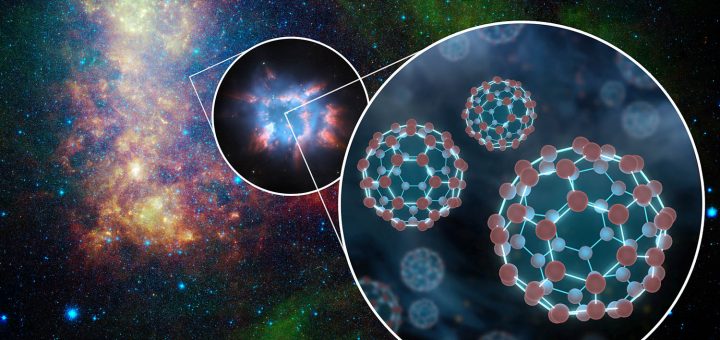
The study of the chemical substances and species occurring in stars and interstellar space
Example: NASA researchers at the Ames' Astrophysics and Astrochemistry Lab in Mountain View, California have provided the first experimental evidence demonstrating that the sugar in DNA - 2- deoxyribose - can be formed in interstellar space.
pt_br: Astroquímica
Celestial
Adjective
Positioned in or relating to the sky, or outer space as observed in astronomy.
Example: The Sun and the Moon are two celestial bodies whose we can see from planet Earth.
pt_br: Celestial
Change
Noun
The act or instance of making or becoming different.
Example: Sometimes we have to accept change, if we want to move forward.
pt_br: Mudança
Chemical property
Noun
A property or characteristic of a substance that is observed during a reaction in which the chemical composition or identity of the substance is changed.
Example: Every type of fuel should be analyzed for the chemical property of flammability since certain actions could result in fiery explosions.
pt_br: Propiedade química
Chemistry
Noun
The branch of science which deals with the identification of the substances of which matter is composed; the investigation of their properties and the ways in which they interact, combine, and change; and the use of these processes to form new substances.
Example: Physics, chemistry and biology are important parts of science.
pt_br: Química
Cohesion
Noun
The action or fact of forming a united whole; the sticking together of particles of the same substance.
Example: In ordinary cases the potting soil should be just so far removed from dryness that when a handful is gently pressed it may hang together, but may lose its cohesion when dropped.
pt_br: Coesão
Composition
Noun
The nature of something's ingredients or constituents; the way in which a whole or mixture is made up.
Example: We cannot determine the chemical composition of soil simply by touching it.
pt_br: Composição
Formula
Noun
A mathematical relationship or rule expressed in symbols; a list of ingredients for or constituents of something.
Example: The chemical formula shows all the elements and compounds involved in the reaction.
pt_br: Fórmula
Matter
Noun
Physical substance in general, as distinct from mind and spirit; (in physics) that which occupies space and possesses rest mass, especially as distinct from energy.
Example: The three states of matter are the three distinct physical forms that matter can take in most environments: solid, liquid, and gas.
pt_br: Matéria
Physical property
Noun
A physical property is a characteristic of matter that can be observed and measured without changing the chemical identity of the sample.
Example: One of the most notable aspects of a stereotypical apple is the color red, a physical property that most all humans can observe.
pt_br: Propiedade física
Preservative
Noun
A substance used to preserve foodstuffs, wood, or other materials against decay.
Example: Salt is a common food preservative.
pt_br: Conservante
Reaction
Noun
An action performed or a feeling experienced in response to a situation or event.
Example: We could tell by his reaction the news wasn't good.
pt_br: Reação
Substance
Noun
A particular kind of matter with uniform properties; the real physical matter of which a person or thing consists and which has a tangible, solid presence.
Example: Acid substances are harmful for our skin.




/chemical-properties-of-matter-608337-v33-5b6334d346e0fb0082054666.png)